
Drywood vs Subterranean Termites in Southern California
Drywood termites can live entirely inside wood without a soil connection, while subterranean termites live in soil and travel to wood through protected routes. That biological difference changes the signs you look for, where an inspection starts and which treatment approaches may be considered.
At a glance
Use these points as a starting checklist, then read the sections below for the context and exceptions.
- The simplest distinction: wood colony vs soil-connected colony: Drywood termites establish colonies within wood.
- What mud tubes tell you: UC IPM describes shelter tubes as one of the most commonly seen signs of subterranean termite activity.
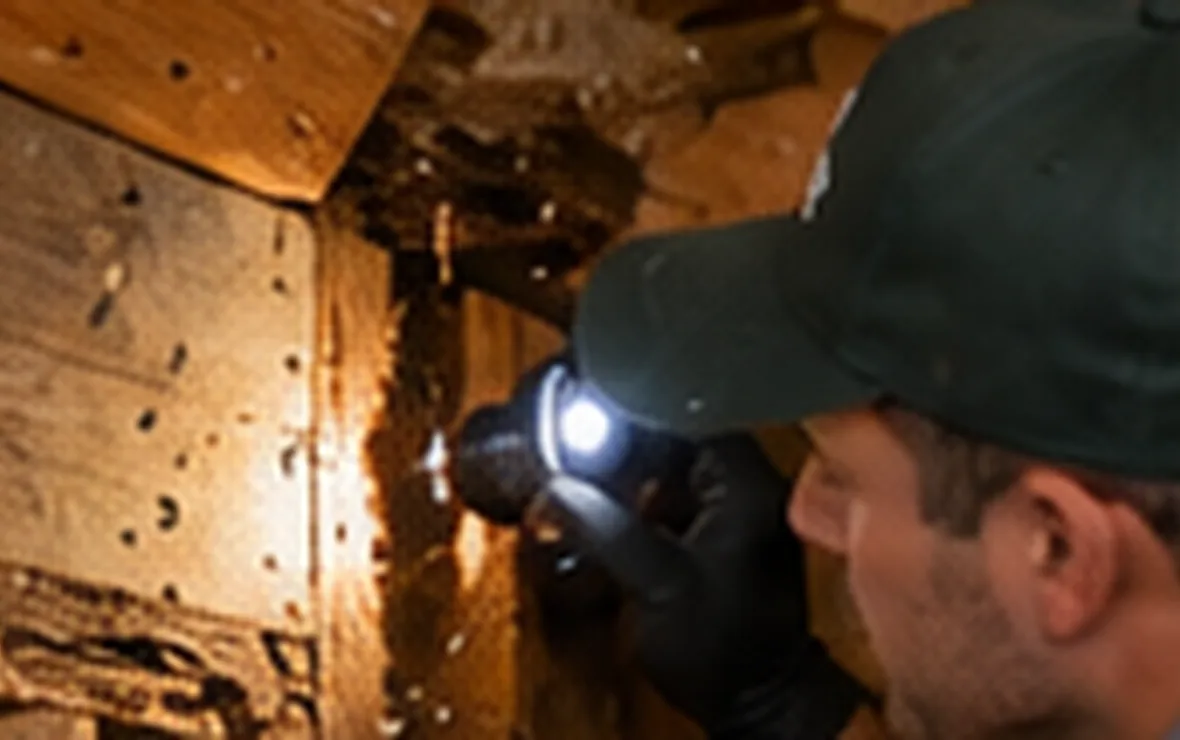
The simplest distinction: wood colony vs soil-connected colony
Drywood termites establish colonies within wood. Homeowners often first notice pellets, discarded wings or swarmers. Subterranean termites maintain a connection to soil and commonly construct shelter tubes as they move between the ground and wood.
A Whittier property can have conditions relevant to either type, so the termite species should be identified from evidence rather than assumed from neighborhood, age of the home or a single photograph.
Side-by-side evidence comparison
| Clue | Drywood termites | Subterranean termites |
|---|---|---|
| Typical habitat | Inside relatively dry wood | Soil-connected colony that forages into structures |
| Common visible evidence | Hard fecal pellets, kick-out holes, swarmers, discarded wings | Mud/shelter tubes, soil-connected activity, swarmers, damaged wood |
| Moisture/soil connection | No soil connection required | Soil connection is central to the colony |
| Treatment decision | Localized vs whole-structure options depend on extent and accessibility | May involve soil treatment, baits, wood/structural corrections and monitoring |
What mud tubes tell you
UC IPM describes shelter tubes as one of the most commonly seen signs of subterranean termite activity. Tubes can run from soil toward wood or across foundation surfaces. Breaking a tube may reveal live workers, but a tube should be interpreted with the surrounding structure and other evidence.
What pellets and swarmers tell you
Drywood termite colonies are difficult to detect because they remain inside wood. Pellets can show that drywood termites have been present in nearby wood, while swarmers or discarded wings can point to reproductive activity. None of these signs alone maps the full extent of hidden colonies.
Why treatment choices are different
UC IPM separates drywood termite treatment into whole-structure and localized methods. Whole-structure fumigation can reach hidden infestations throughout a building, while localized treatment depends heavily on finding and reaching the affected colony. Subterranean management follows a different path because the colony is soil-connected.
In California, fumigation is regulated as Branch 1 work, while non-fumigation wood-destroying-organism treatment and corrections fall under Branch 3. A qualified provider should explain which branch and treatment scope apply to the actual inspection findings.
What to do when you are not sure which termite you have
Collect photographs of pellets, tubes, insects, wings and the surrounding wood. Avoid choosing treatment solely from online identification. A termite inspection can establish the pest type and evidence pattern before a treatment decision is made.
Frequently asked questions
Can a property have both drywood and subterranean termites?
Yes. Different termite groups can occur at the same property, so identification should follow the evidence.
Which termite makes pellets?
Drywood termites commonly expel hard fecal pellets from galleries in wood.
Which termite makes mud tubes?
Subterranean termites commonly build shelter tubes that protect travel between soil and structural food sources.
Related guides and services
Call to describe the pest signs you are seeing, or use the service request form.
(562) 271-9238